
I found a Miriam Haskell necklace tucked inside a vintage purse at a garage sale. Here is how I figured out what I had, and how you can do the same.

The Find: A Necklace Hiding in a Bobbie Jerome Purse
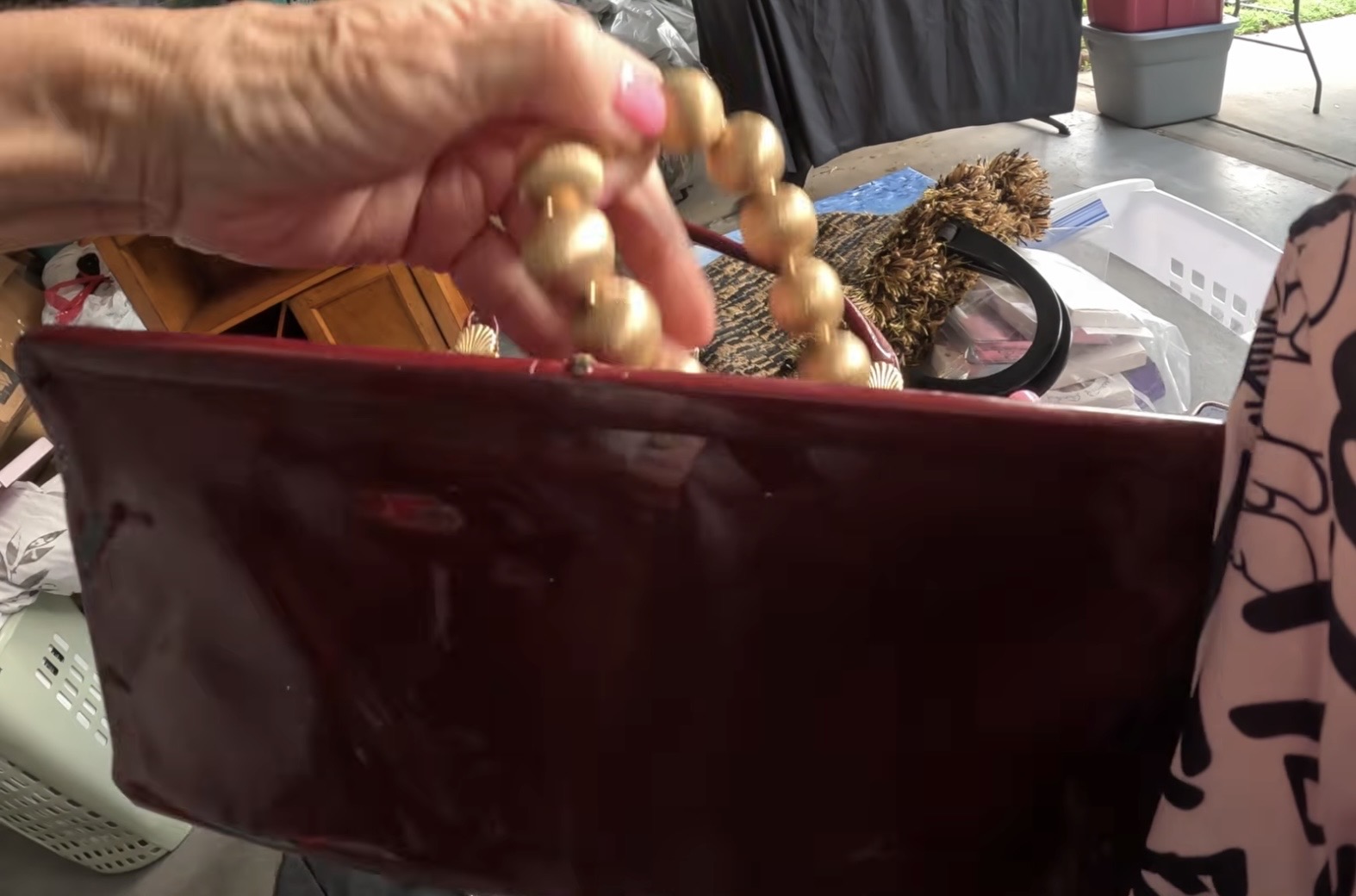
I went to the garage sale for the purse. It was a burgundy patent leather envelope clutch by Bobbie Jerome, a classic mid-century handbag label. When I opened it up, a heavy strand of gold-tone beads was sitting inside.
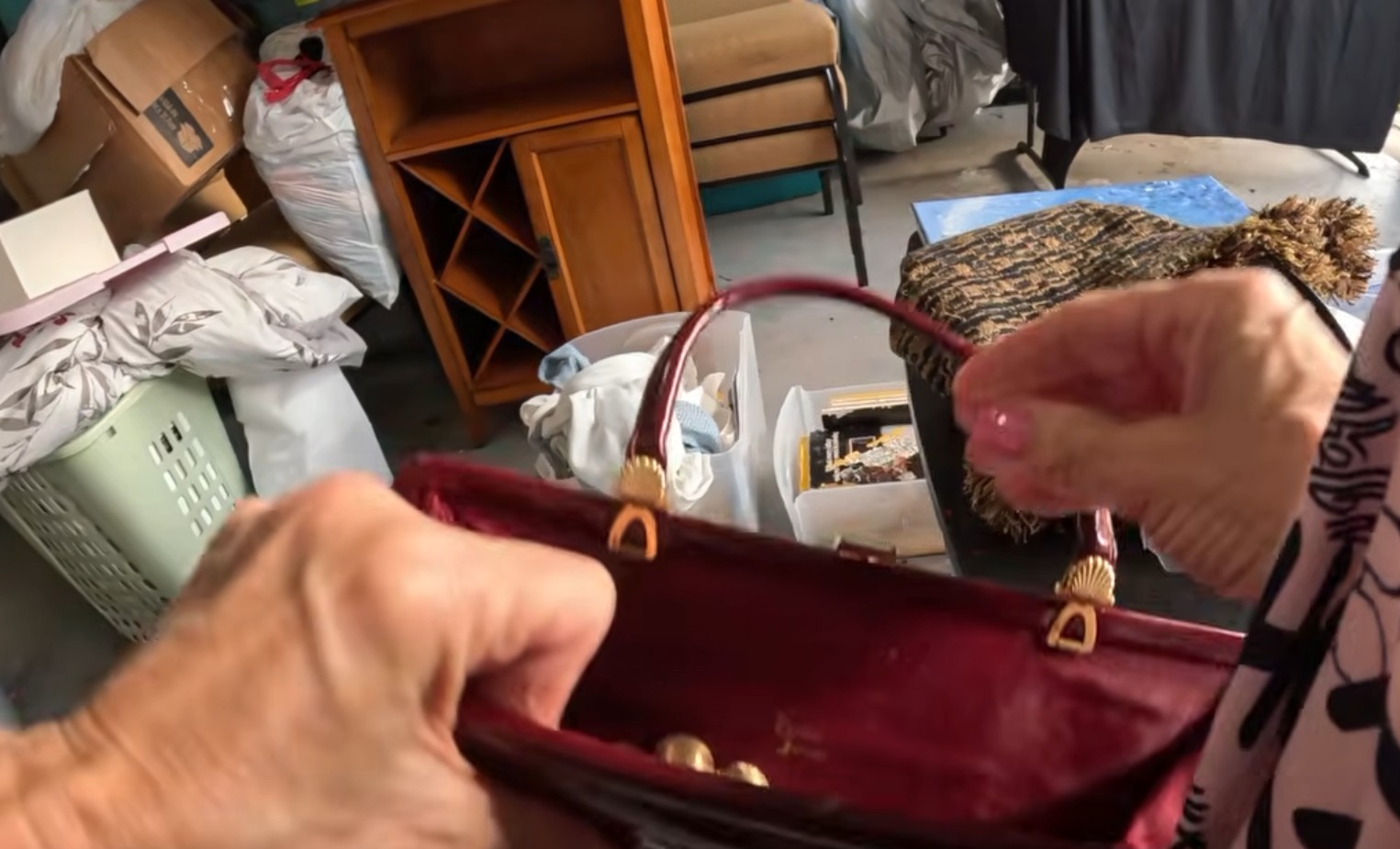
Big, textured ball beads with a soft brushed finish are exactly the kind of piece that makes a reseller stop and look closer. Then I checked the marks, and it was signed Miriam Haskell.
The purse sold quickly on eBay for $59.99, and the necklace is currently listed there too.
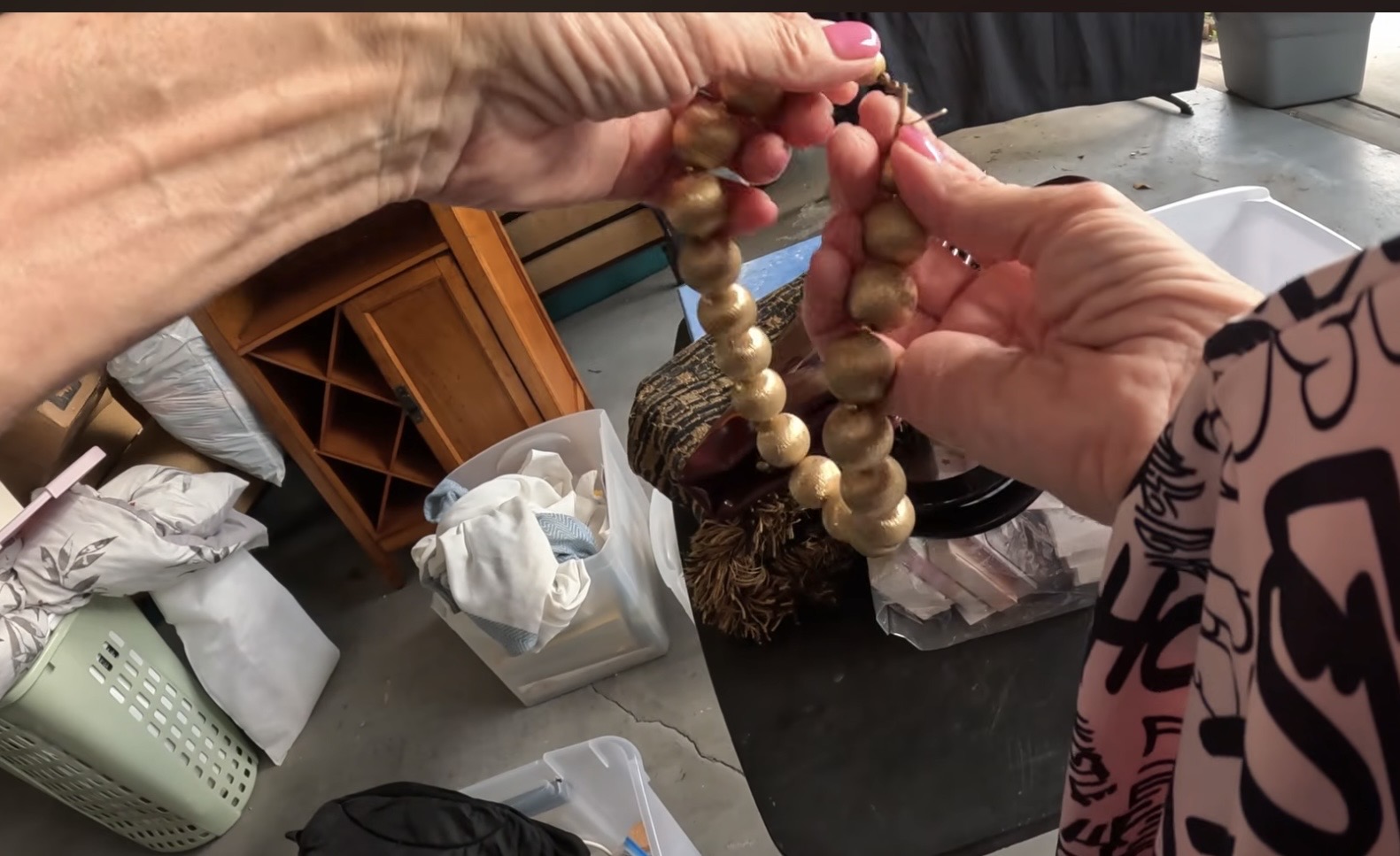
A Quick Background on Miriam Haskell
Miriam Haskell opened her first shop in New York City in the 1920s, and the name became one of the most collectible in American costume jewelry. The pieces were made by hand, with beads wired individually onto metal bases rather than mass-produced. Designers working for the company, most famously Frank Hess, created the lush, layered look collectors chase today.
Typical materials include glass beads, faux baroque pearls, seed beads, crystals, and a warm, antique-looking gold finish sometimes called Russian gold over brass. That handwork is a big part of why Haskell commands more than ordinary costume jewelry.
Step 1: Check the Maker’s Marks
Look for a signature on the clasp, a small metal tag, or a plaque attached to the piece. Use a magnifier or your phone camera zoomed in, and check all of these spots:
- The clasp and the area right next to it
- Any small plaque or tag on the back of a brooch or near the closure
- The underside of metal findings and connectors
Things to know about Haskell marks:
- The spelling is Haskell, with two L’s. Misspelled listings are common, so search both ways when you research.
- Marks changed over the decades. The shape, lettering, and style of the signature plaque differ by era, which is one of the main ways collectors narrow down age. Compare your piece against a reliable reference guide or photos of verified examples.
- Early pieces are often unsigned. Many of the earliest Haskell pieces carried no mark at all, so a missing signature does not automatically rule Haskell out. It does mean you need other evidence.
- Look-alikes exist. Plenty of makers copied the style, and fake plaques exist, so never rely on the signature alone.
Reseller tip: Photograph the signature in sharp, close detail. Buyers of signed designer jewelry look for it first, and clear mark photos build trust.
Step 2: Estimate the Age
Dating costume jewelry is about stacking clues, not finding one magic answer.
- Signature style: The form of the mark is your best clue.
- Construction: Hand-wired beads, brass findings, and a mellow gold finish suggest older work. Glued, stamped, or very uniform parts point to later or cheaper production.
- Clasp type: Compare the clasp with dated examples. Clasp designs shifted across the decades.
- Wear and patina: Honest aging, such as gentle softening of the finish, is normal. Be wary of wear that looks artificial.
- Design period: Chunky bead styles and bold statement necklaces were popular in several eras, so style by itself narrows the range only a little.
When you list a piece, “vintage” with a decade range you can support is better than a precise year you cannot prove.
Step 3: Evaluate the Value
This is where many sellers go wrong. The price on an active listing is what someone hopes to get, not what the piece is worth.
- Search eBay, then filter to Sold Items. Sold prices show what buyers actually paid.
- Match carefully. Compare the same style, size, materials, signature, and condition. A strand of large beads and a delicate pearl cluster are not the same market.
- Judge condition honestly. Check for flaking finish, missing or loose beads, repaired wiring, a weak clasp, and discoloration. Each one lowers value.
- Allow for fees and shipping. Your profit is the sale price minus what you paid, eBay fees, and shipping supplies.
- Be patient with high-value pieces. Signed designer jewelry may take longer to sell, and offers are common.
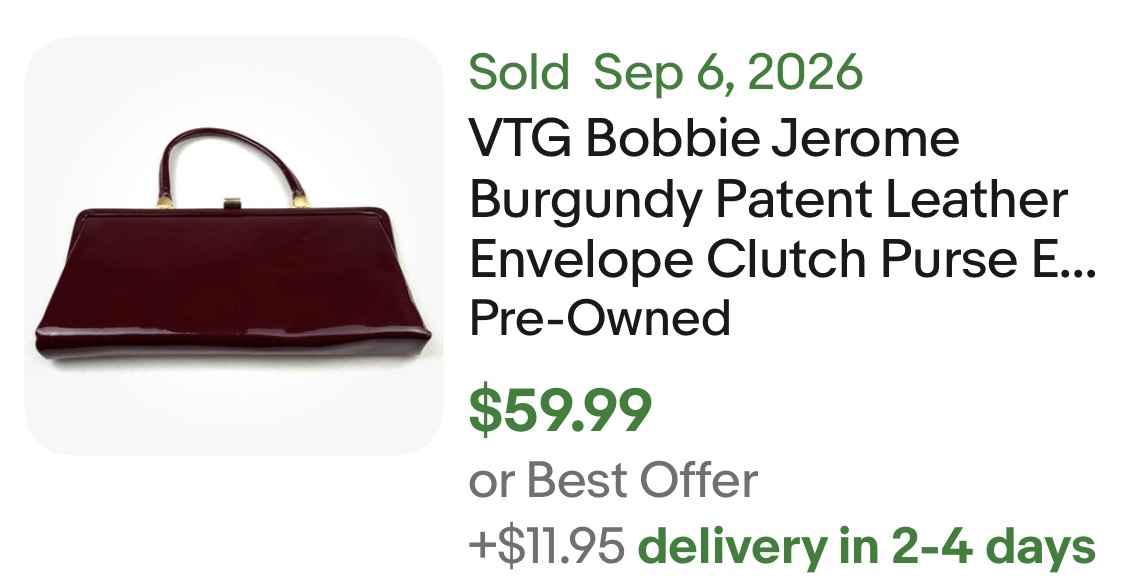
I price based on comparable sold listings and leave room for offers. I will let you know in a future video what it ends up selling for.
What to Take Away
- Always open the purses, boxes, and bags at a sale. The best find may be inside something else.
- Check for signatures on clasps and tags, and learn how Haskell marks changed over time.
- Use sold listings, not asking prices, to estimate value.
- Be honest about condition and date range in your listings.
Watch the Full Garage Sale Find on YouTube
See me discover the necklace, check the marks, and list it for sale.
New to reselling? Subscribe to Retire and Resell on YouTube and learn how to find undervalued treasures at garage sales and sell them online.
Prices and listing details reflect what was shown on eBay when this post was written and may change.